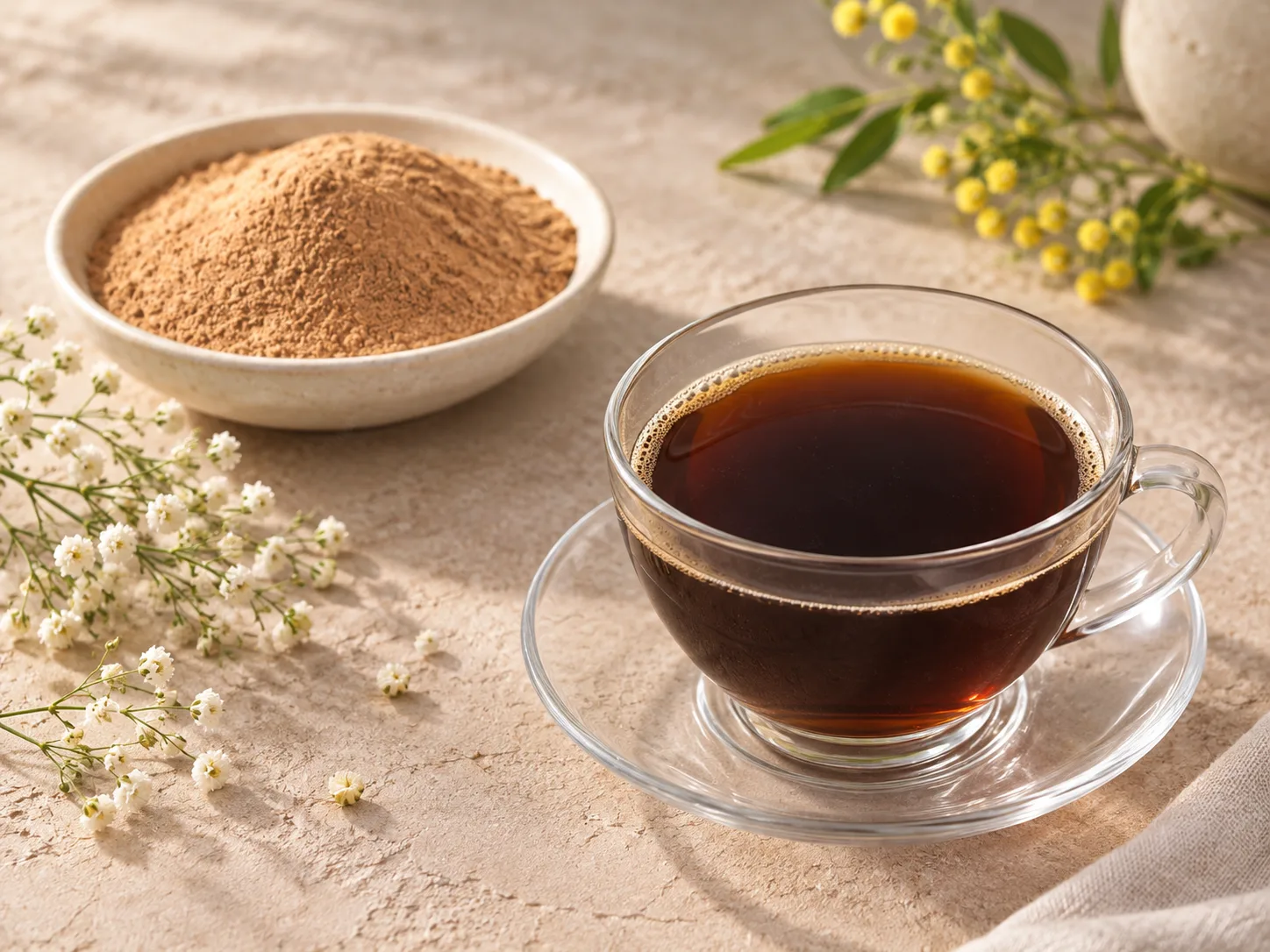
The Problem: Yellowing and Discoloration in Sugar Drying
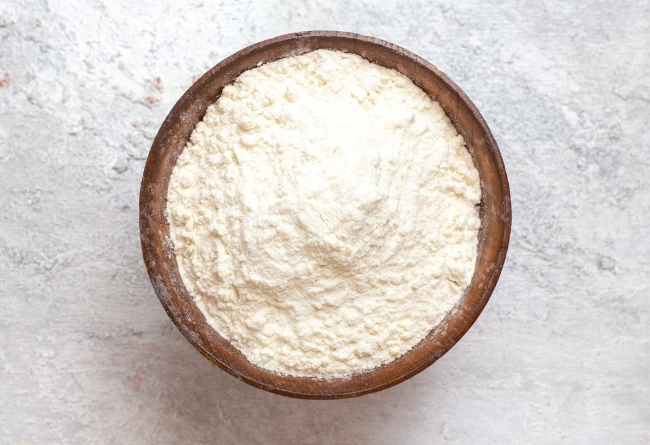
Lactose and fructose can yellow when they spend too long at elevated drying temperatures. A vacuum belt dryer turns traditional static drying into continuous vacuum drying and can reduce drying time from 10–20 hours to 30–60 minutes for suitable feeds. In a vacuum belt dryer, the drying temperature is adjustable for different products. This avoids the extended heating of a traditional oven and spray dryer. In addition, the hot air used for spray drying may reach 180–200°C. For some heat-sensitive, high-sugar or high-viscosity materials, nozzle blockage, wall sticking, color change or unstable quality may occur.
Video Case: Lactose and Fructose Dehydration Objectives
In our recent video case, we introduce specific liquid and paste sugar samples to demonstrate the dehydration process using the Minjie Vacuum Belt Dryer for Liquid & Paste. The primary objective is achieving thorough dehydration while strictly avoiding color degradation and maintaining product consistency.
Role of Minjie Vacuum Belt Dryer in the Case
Low Temperature Dehydration Mechanism
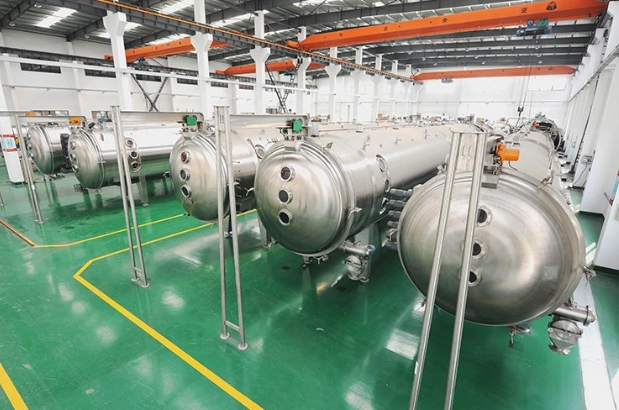
Under high vacuum, the boiling point of the liquid is lowered; water in the liquid material is evaporated. Belts move over the heating plates. Steam, hot water or hot oil can be used as heating media. As the belts move, the product passes through evaporation, drying and cooling before discharge. The temperature decreases through this process and can be adjusted for different products. Research on vacuum drying of fructooligosaccharide (FOS) syrup has shown that operating pressure, heating temperature, and initial moisture content influence drying behavior. The dominant heat-transfer mechanism also changes as the syrup becomes more viscous during dehydration (Zhao et al., 2023).[1]
Continuous Manufacturing on the Vacuum Band Dryer
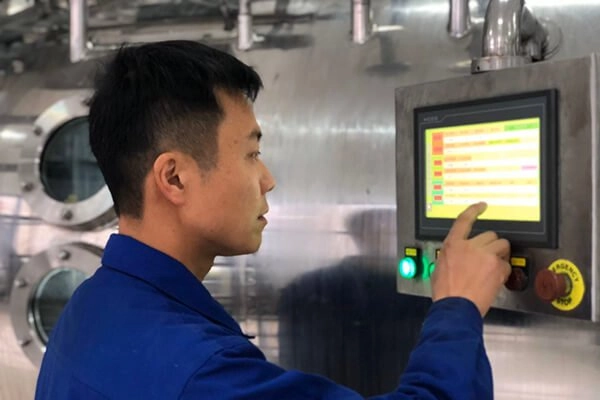
A vacuum belt dryer provides continuous infeed and discharge under vacuum. Liquid product is conveyed into the dryer by an infeed pump and evenly spread on the belts by a distribution device. A vacuum crusher at the discharge end can produce different powder or granule sizes. The dry product can then be packed automatically or sent for further processing. Compared with batch-type equipment such as traditional ovens and freeze dryers, the Vacuum Belt Dryer System for Liquid & Paste has a higher degree of automation and can reduce operations such as manual tray loading, feed-in and discharge, tray turning, material collection, and subsequent crushing. The equipment has a PLC automatic control system and an adjustable heating-temperature range of 30–300°C; the setting depends on the material. Feeding, drying, granulating and discharge take place within the closed system.
Confirmed Results and Application Testing
The video results showcase the capabilities of our equipment, effectively avoiding discoloration and producing fluffy, easy-to-pulverize sugars with great fluidity.
To ensure each client can choose suitable equipment from Minjie, we set up a low-temperature drying and concentration equipment test platform and provide free test service for clients who are interested in our products. More than 500 companies visit Minjie each year for investigation and testing. These tests verify evaporation capacity, drying time and final product moisture for the client’s formulation. Readers can contact Minjie to arrange material tests.
Frequently Asked Questions
Q: Is the continuous vacuum dryer suitable for other heat-sensitive food liquids?
A: Yes. Minjie’s food applications include malt extract, carbohydrates, instant beverages, tea powder, cocoa powder and corn paste. The vacuum belt dryer is especially suitable for liquid or paste materials with high viscosity, a tendency to agglomerate, or sensitivity to heat.
Q: How exactly does this process prevent lactose and fructose from yellowing?
A: The Vacuum Belt Dryer System for Liquid & Paste can reduce the temperature required for moisture evaporation in the material under vacuum conditions, and gradually dehydrate the material at a lower temperature by adjusting the belt running speed and drying residence time. This reduces the exposure that can lead to yellowing, provided the settings are suitable for the material.
Q: Does the vacuum belt dryer affect the fluidity of the pulverized sugars?
A: No, as described in the video case, the final dehydrated products are fluffy, easy to pulverize, and have good fluidity without clumping. Provided that the sample contains an appropriate amount of seed crystals, the resulting product can be a powder with good flowability.
Q: Can we arrange a sample test for our specific syrup or food paste?
A: Yes, clients are encouraged to consult with Minjie Machinery to arrange application tests for similar materials to verify the low-temperature drying effect.
References
[1] Zhao, L., Xie, H., Liu, Y., Ran, C., & Wu, Z. (2023). Heat and mass transfer in vacuum drying process of fructooligosaccharides syrup. International Journal of Food Engineering, 19(9), 397–409.