In the production fields of food, pharm, bio, herb extracts and fine chemicals, the drying process is a key procedure that determines finished product quality, batch stability and production cost. Especially for materials featuring heat-sensitive components and high viscosity, which tend to suffer from uneven drying during processing.A wide range of drying equipment is available on the market, yet most conventional models have prominent technical limitations. Improper equipment selection will easily cause active ingredient loss, material oxidation, uneven drying, high material loss and low production efficiency. This article mainly analyzes the core advantages of vacuum belt dryer, and compares the pros and cons of mainstream drying equipment, helping manufacturing enterprises select more reliable and cost-effective drying solutions for mass production.
I. Common Defects of Mainstream Traditional Drying Equipment
Most traditional drying equipment can only adapt to single production conditions and cannot balance product quality, drying uniformity and continuous production capacity. The specific shortcomings of mainstream equipment are summarized as follows:
Spray Dryer: It supports continuous high-speed drying and is suitable for liquid materials. However, it relies on high-temperature atomization at 150-250°C for drying. High temperature will destroy the active ingredients of heat-sensitive materials, resulting in reduced product activity and discoloration. Besides, this process imposes strict property requirements on raw materials. Products with high viscosity frequently clog nozzles and block normal feeding.In addition, it causes serious fine powder loss with high energy consumption, which is only applicable for high-temperature resistant materials with low quality requirements.
Freeze Dryer: It adopts ultra-low temperature drying to well protect heat-sensitive and easily oxidized materials with excellent finished product quality. Nevertheless, it has an ultra-long drying cycle of 36-72 hours, accompanied by extremely high energy consumption and high equipment investment costs. It only adapts to small-batch intermittent production for laboratory research and high-end sample preparation, and cannot meet the demand for large-scale continuous industrial production.
Vacuum Oven: It works at a low and moderate temperature range with basic vacuum protection function. As a static batch drying device, it features long drying time of 8 24 hours . Materials are stacked statically during processing, leading to poor drying uniformity, large batch-to-batch difference and unstable finished product quality, which is not suitable for standardized mass production.Besides, its feeding and discharging run in batch mode and demand heavy manual operation. Dried materials feature poor physical properties; they easily reabsorb moisture and get oxidized during crushing, it fails to retain the merits brought by the original vacuum process.
Fluidized Bed Dryer: It has good drying uniformity and continuous production capacity for granular solid materials. But it has extremely high requirements for material properties, only applicable to specific loose granular materials. It cannot process viscous materials, pastes and agglomerable materials, resulting in narrow application scope and poor versatility.Moreover, material residence time inside the equipment cannot be regulated. Partial materials tend to agglomerate while drying and require manual intervention, resulting in poor process stability.
Hot Air & Heat Pump Dryer: Such equipment has low procurement cost and simple operation. However, the drying process is exposed to the air, which easily causes material oxidation and moisture reabsorption. The static drying mode leads to uneven heating, poor finished product consistency and low comprehensive production performance.
II. Core Advantages of Vacuum Belt Dryer for Industrial Production
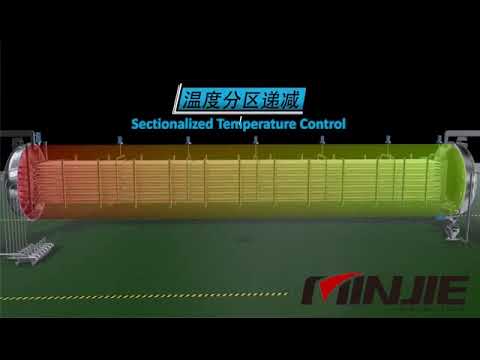
Different from traditional drying equipment with single performance, the vacuum belt dryer integrates vacuum low-temperature technology and dynamic continuous drying structure. It enables feeding and discharging operations to proceed under vacuum conditions.It perfectly makes up for the various defects of traditional equipment, and adapts to the diversified production needs of solid, liquid and paste materials in multiple industries.
- Low-temperature vacuum drying to protect heat-sensitive and easily oxidized materials
The equipment is designed with a wide adjustable temperature range starting from 30°C. The whole drying process is completed in a closed vacuum environment, which effectively isolates air, water vapor and impurities. It avoids thermal degradation, oxidative browning and active ingredient loss of materials, and maximally retains the original color, flavor and biological activity of finished products. It is highly adaptable to heat-sensitive materials such as natural extracts, fermentation broths, probiotics and biological proteins.
- Wide material adaptability, compatible with liquid, paste and solid materials
Most traditional dryers can only process single-type materials. The vacuum belt dryer can directly process various liquid concentrates, high-viscosity pastes, block solids, granular and powdery materials without pre-granulation and pre-shaping. One piece of equipment covers multiple production scenarios, effectively reducing enterprise equipment investment and production line transformation costs.
- Dynamic continuous drying to ensure uniform finished product quality
Different from static stacking drying, materials are evenly laid on the transmission belt and move slowly and continuously in the drying chamber. The uniform heating environment eliminates local over-drying or under-drying problems. The finished products feature stable moisture content and uniform texture, with tiny batch-to-batch difference, fully meeting the strict quality standards of large-scale standardized production.
- High drying efficiency to support 24-hour automated mass production
The conventional drying cycle is shortened to 0.5-1 hour, which is dozens of times more efficient than freeze dryers and vacuum ovens. The fully automatic feeding, drying and discharging system realizes 24-hour uninterrupted continuous production, reduces manual intervention, greatly improves production throughput and solves the efficiency bottleneck of traditional batch drying equipment.
- Closed vacuum structure to realize low material loss
The fully closed vacuum operating environment avoids powder flying, material splashing and wall adhesion loss existing in open drying equipment such as spray dryers. The material yield rate is effectively improved. For high-value raw material production, low material loss directly reduces production costs and improves economic benefits.
- Balanced energy consumption with high long-term cost performance
Compared with freeze dryers with ultra-high energy consumption, the vacuum belt dryer maintains moderate and controllable operating energy consumption while ensuring low-temperature high-quality drying. It has stable operation performance and low failure rate, with simple daily maintenance. Its main operating cost stems from round-the-clock continuous running. Even so, the unit production cost of finished products remains extremely low.
III. Applicable Production Scenarios of Vacuum Belt Dryer
The vacuum belt dryer is the optimal upgrading solution for manufacturing enterprises with the following production demands:
Enterprises that produce heat-sensitive, easily oxidized and high-activity materials and need low-temperature protective drying;
Enterprises that require continuous large-scale production and strict batch quality consistency;
Enterprises that need to process diversified materials such as liquid paste, solid powder and block materials;
Enterprises troubled by high material loss, low yield and unstable finished product quality;
Enterprises that need to eliminate intermittent production modes and realize automatic and intelligent upgrading of drying production lines.
IV. Conclusion
Traditional drying equipment generally has inherent contradictions in production, making it difficult to take into account product quality, production efficiency and production cost. The vacuum belt dryer perfectly solves the industry pain points of traditional drying processes by virtue of low-temperature vacuum protection, dynamic uniform drying, strong material compatibility, continuous high efficiency and low loss performance. It is widely applicable to food, pharmaceutical, biological, fine chemical and other industries, and has become the preferred drying equipment for modern enterprise production line upgrading and high-standard mass production.