From FDA Continuous Manufacturing Trends: How Vacuum Belt Dryers (VBD) Solve Continuous Drying Challenges for Heat-Sensitive Materials
Introduction: The Era of Continuous Manufacturing in Pharma Has Arrived
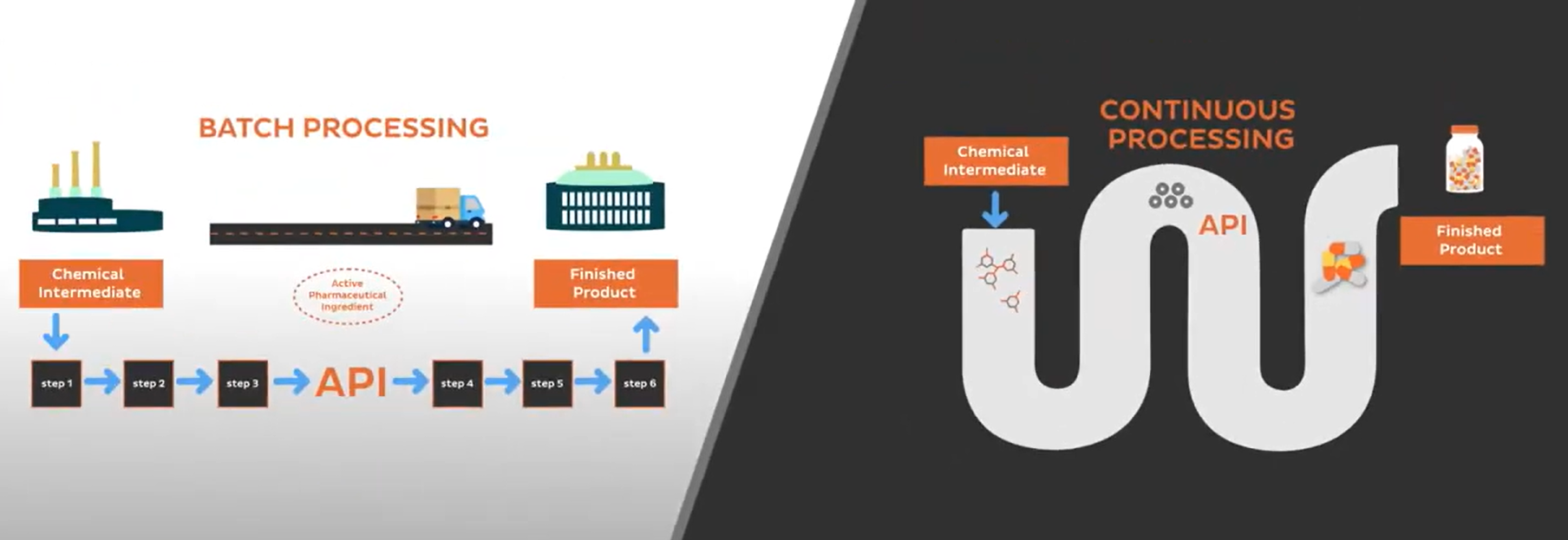
With the global implementation of the ICH Q13 Guideline on Continuous Manufacturing of Drug Substances and Drug Products, the global pharmaceutical industry is undergoing a paradigm shift from traditional batch processing to continuous manufacturing (CM). Regulatory authorities like the US FDA have consistently highlighted that continuous production minimizes batch-to-batch quality variations and significantly reduces facility footprint.
To address the challenges of drying heat-sensitive natural products and biologics, the Vacuum Belt Dryer (VBD) serves as an exemplary system aligned with ICH Q13 principles. Its closed-loop design—featuring continuous feeding, low-temperature evaporation, multi-zone temperature control, and continuous discharge—meets the stringent requirements of modern pharmaceutical manufacturing for Process Analytical Technology (PAT) integration and cGMP-compliant closed processing.
Traditional batch manufacturing faces long-standing painpoints: large footprints, high intermediate storage costs, scale-up risks, and batch-to-batch inconsistency. In contrast, continuous manufacturing integrates individual unit operations to dramatically compress cleanroom footprint, lower energy consumption, and ensure robust product quality via high-level digital inline monitoring.
I. Bottlenecks in Traditional Drying: Heat Sensitivity vs. Continuity
In the processing of natural medicines, Botanical Drug Substance (BDS) extracts, biologics (such as polysaccharides, polypeptides, and enzymes), and high-potency Active Pharmaceutical Ingredients (APIs), the drying stage frequently becomes the bottleneck for both product quality and throughput:
Static Vacuum Tray Dryers (Batch Ovens): Heavily reliant on manual loading and unloading; incapable of continuous automation; prone to uneven heating and risk of secondary contamination during intermediate holding.
Spray Drying: Achieves continuous flow, but inlet air temperatures typically exceed 150°C. This extreme thermal load frequently leads to thermal degradation, caramelization, or hygroscopic caking of heat-sensitive compounds.
Lyophilization (Freeze Drying): Preserves heat-sensitive active ingredients well, but demands substantial capital expenditure, consumes massive energy, and is difficult to integrate into a continuous production line.
The industry urgently requires a processing solution that protects thermolabile compounds while enabling true, uninterrupted continuous feed and discharge.
II. Vacuum Belt Drying (VBD): A Breakthrough in Continuous Drying
Continuous Vacuum Belt Drying technology transforms traditional static vacuum drying into an efficient, automated line by pairing a low-boiling-point vacuum environment with continuous conveyor belts:
1. Low-Temperature Continuous Drying with Preserved Bioactivity
Under vacuum levels of -0.095 MPa to -0.099 MPa, the boiling point of water drops significantly (evaporating rapidly at 30°C to 50°C). Materials are evenly spread along the conveyor belt, evaporating moisture under minimal thermal stress to maximize the retention of active ingredients and biological activity.
2. An Integrated “Feed-Dry-Granulate” Continuous Flow
Continuous Feeding: High-precision metering pumps continuously and uniformly distribute liquid or paste feed onto the conveyor belts within the vacuum chamber.
Independent Zone Temperature Control: Materials advance along the belt through distinct preheating, evaporation, crystallization/drying, and cooling zones, each independently regulated for precise thermal profiles.
Continuous Discharge: Integrated vacuum milling and discharge systems at the terminal end directly output dried powders or granules of targeted mesh sizes, achieving a true “continuous liquid-in, dry-powder-out” process.
3. Elimination of Holding Tanks and Reduced Footprint
In alignment with continuous manufacturing philosophy, VBD eliminates the need for intermediate holding tanks and manual transfer steps. This reduces Work-In-Progress (WIP) residence time while drastically reducing cleanroom space requirements and operational energy costs.
III. Empowering cGMP Compliance and Digital Quality Control
Modern continuous pharmaceutical production places uncompromising demands on equipment compliance and data integrity. Our Vacuum Belt Drying systems are engineered around these standards from the ground up:
Clean-in-Place & Sterilize-in-Place (CIP / SIP): Designed with sanitary, dead-leg-free internal geometries, supporting automated inline cleaning and sterilization to prevent cross-contamination and ensure full cGMP compliance.
Process Analytical Technology (PAT) Integration: Supports integrated inline temperature, and pressure sensors for real-time data acquisition. These systems dynamically adjust belt speed and zone temperatures to guarantee that every batch experiences an identical thermal profile.
Modular Scale-Up: Throughput can be adjusted by altering belt speed and campaign run times, completely eliminating traditional scale-up risks.
Conclusion
Continuous processing is an irreversible trend across the pharmaceutical industry and broader manufacturing sectors, including food and chemical processing, where it consistently improves product quality across the entire production line. As an equipment manufacturer specializing in concentration, drying, and sterilization systems, we are committed to providing high-quality continuous manufacturing solutions that help our customers in the pharmaceutical and health industries enhance product quality, lower operating costs, and accelerate time-to-market for new drugs.
Contact our technical expert team today to request a continuous trial drying report or a customized process engineering solution for your specific materials!