Understanding the Core Drying Technologies
The Continuous Process of a Vacuum Belt Dryer
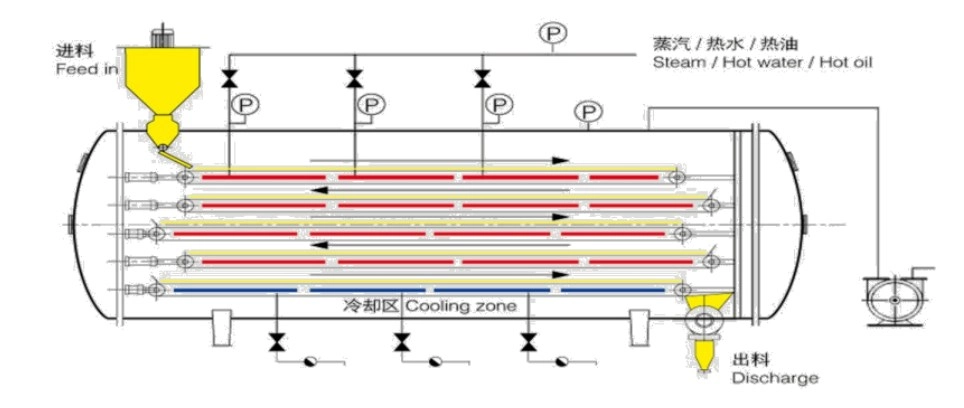
A continuous vacuum drying equipment system works as a steady infeed and discharge solution built for modern industrial manufacturing. The liquid or paste product is transferred into the dryer body via an infeed pump and evenly spread onto the belts by a distribution device, all under high vacuum conditions. Because this occurs under high vacuum, the boiling point of the liquid is lowered, which allows the water in the liquid material to evaporate efficiently without relying on extreme heat. The belts travel smoothly on the heating plates. The belts move on the heating plates evenly, utilizing steam, hot water, or hot oil as heating media. With the movement of the belts, the product passes through stages from initial evaporation and drying to cooling and final discharging. The temperature drops gradually during this process. Operators can adjust the temperature for different products. In the end, the dry powder or granule product can be packed automatically or moved on to subsequent processes.
The Batch Operation of a Vacuum Drying Oven
Traditional static drying depends on placing trays of wet materials into a sealed chamber. Pressure drops inside the chamber, and heat is applied. This method is inherently a batch operation. Materials stay still inside the chamber. The evaporation rate is limited by the surface area exposed on the trays. A traditional drying oven needs a drying time from 10 to 20 hours to finish one batch of material. During this long period, the raw materials face extended thermal exposure. Prolonged thermal exposure often causes product denaturation. This issue forms a major drawback of traditional batch ovens. Furthermore, once a batch is finished, the entire system must be depressurized, opened, unloaded, and cleaned before the next cycle can begin.
The Sublimation Principle of a Freeze Dryer
Lyophilization uses the principle of sublimation to remove moisture. The raw material is frozen solid first. Then the environmental pressure drops sharply inside a vacuum chamber. This change lets the frozen water move directly from solid ice to vapor. The process skips the liquid phase completely. This technology works well at keeping the exact cellular structure and original volume of very sensitive materials. However, reaching and holding the extreme sub-zero temperatures and deep vacuum levels for sublimation needs complex refrigeration systems. The method also requires long processing cycles. As a result, the approach stays batch-oriented and resource-intensive.
Head-to-Head Comparison: Energy, Labor, and Contamination
Energy Consumption: Which Is the Most Cost-Effective?
Industrial processing facilities always check utility expenses. Energy efficiency therefore becomes a main factor when choosing equipment upgrades. Freeze drying needs heavy-duty refrigeration compressors and deep-vacuum pumps to run for days. This setup leads to high electricity use. Traditional batch ovens lose thermal energy during the heating and cooling cycles between manual batch changes.
Energy-efficient drying systems such as continuous vacuum belt dryers change this situation completely. These systems turn traditional static drying into vacuum dynamic drying. The advanced systems cut drying time from 10 to 20 hours down to only 30 to 60 minutes. The drying temperature can be set from 30 to 300 degrees Celsius. Facilities can therefore match the exact thermal needs of the product without wasting extra heat. In addition, there is little loss of product, and solvent recycling remains possible.
Labor and Automation: Breaking the Bottleneck of Batch Drying
Manual work slows production and raises operational budgets. Running a standard drying oven requires workers to fill hundreds of individual trays by hand. Staff must stack the trays onto carts, load the chamber, and later scrape the dried material off the trays. This heavy labor creates a bottleneck that limits growth.
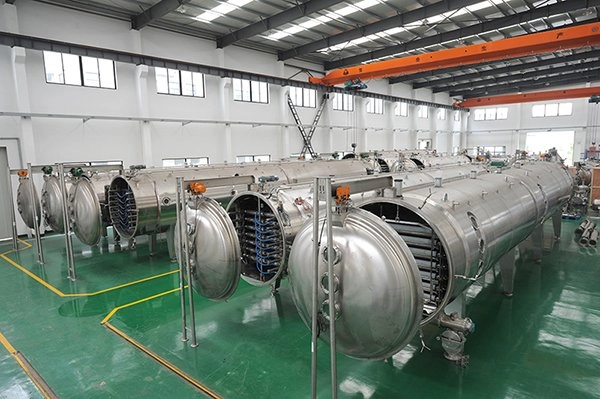
An automated industrial vacuum dryer solves these limits with smart design. The equipment ensures continuous feed-in, drying, granulating, and discharging under vacuum. A special vacuum crusher sits at the discharge end to create different sizes of end products without extra labor. The entire operation is managed by a programmable logic controller automatic control system, and cleaning is handled by a clean-in-place cleaning system. By removing manual tray handling facilities, we gain much lower labor costs and reduced energy use.
Hygiene and Contamination: Keeping Your Product Pure
Strict hygiene is critical for food, chemical, and biological processing. When workers open oven doors to move trays, the materials meet outside air humidity and possible airborne particles. Batch systems, therefore, carry risks of oxidation and cross-contamination during transfer steps.
Continuous vacuum belt dryers fix this quality control problem with a fully closed system. No contamination enters the process. The product travels from the infeed pump all the way to the dry powder discharge point inside a sealed vacuum environment. This complete isolation helps the equipment meet Good Manufacturing Practice standards. The color, solubility, and ingredient preservation of the dry product from a vacuum belt dryer stand out clearly.
When to Choose a Vacuum Belt Dryer (Continuous Processing for Liquids, Pastes, and Powders)
This closed vacuum drying system forms the best choice for large-scale continuous industrial manufacturing. For liquid or paste feedstocks, the system is used mainly in processing food products such as malt extract, carbohydrates, instant beverages, tea powder, cocoa powder, and corn paste. The system also handles chemical products. The equipment suits drying materials with high viscosity, easy agglomeration, thermoplasticity, or thermal sensitivity.
For solid materials and heat-sensitive powders, a dedicated vacuum belt system provides continuous input and even distribution. The constant motion of the belts agitates the material. Agitation speeds up evaporation and creates complete product homogeneity. This feature makes the system especially suitable for products that oxidize easily or are flammable, explosive, highly irritating, or highly toxic. The system also fits raw materials that need high-quality final results, such as recycled polymer materials and lithium battery materials.
Why Minjie is Your Trusted Partner for Vacuum Drying Solutions
Founded in 1998, Minjie Machinery is engaged in the research, manufacturing, and sales of food, chemical, and biotechnology machinery. We have adhered to a core philosophy of integrity and ethical business practices, ensuring that client needs drive their engineering efforts and fuel continuous innovation. Minjie developed the first Chinese vacuum belt dryer. The company has since grown to five series of products with self-owned intellectual property rights. These include more than 30 models of drying systems for liquids, pastes, powders, and particles.
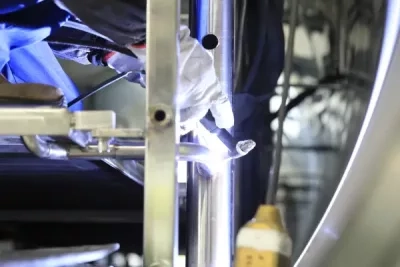
To keep product quality stable, Minjie has spent heavily on advanced manufacturing equipment. The list includes automatic argon arc welders, automatic laser welders, automatic laser cutters, automatic polishers, and computer numerical control machine centers. Today, we have reached over 20 provinces in China and more than 20 countries worldwide. The equipment supports more than 600 users.
FAQ
Q: Which drying method consumes the least energy for bulk liquid and paste materials?
A: A continuous vacuum drying equipment system offers the most cost-effective solution for bulk liquids and pastes. By utilizing high vacuum conditions, the boiling point of the liquid is lowered, allowing evaporation to occur rapidly using standard heating media like steam, hot water, or hot oil. This dynamic approach shortens the required processing time from 10 to 20 hours to just 30 to 60 minutes. Energy consumption drops sharply compared to traditional static ovens and refrigeration-heavy freeze dryers.
Q: How does automation in a vacuum belt dryer reduce labor costs compared to a vacuum drying oven?
A: Traditional ovens require workers to load wet product onto individual trays by hand. Staff place the trays into the oven and scrape the dried product off hours later. An automated industrial vacuum dryer performs continuous feed-in drying, granulating, and discharge entirely in a vacuum state. A programmable logic controller automatic control system manages the process. No human intervention is needed during processing. Labor costs therefore fall and operational efficiency rises.
Q: What is the main difference between continuous vacuum drying equipment and a freeze dryer?
A: The main difference lies in production costs and application focus. Because of their massive energy consumption and long processing times, freeze dryers are typically reserved for ultra-premium products like high-end foods, health supplements, pharmaceuticals, biological products, and daily chemicals. In contrast, the greatest advantage of the continuous vacuum dryer is its ability to significantly lower production costs while still providing exceptional protection for heat-sensitive ingredients. It utilizes highly efficient, low-temperature drying to perfectly preserve active compounds, color, and solubility, offering a cost-effective solution that maintains premium product quality without the extreme operational expenses associated with freeze drying.
Q: How do closed vacuum belt drying systems prevent material contamination?
A: Airborne dust, moisture, and manual handling are primary contamination vectors in manufacturing. Vacuum belt drying systems eliminate these risks because the equipment functions as a completely closed system from the infeed pump to the final discharge crusher. The process happens entirely isolated from the external environment, ensuring there is no contamination. Additionally, the inclusion of a clean-in-place cleaning system ensures thorough sanitation between batches, easily meeting strict Good Manufacturing Practice standards.
Q: What is the best industrial drying equipment for heat-sensitive powder and particles?
A: The most effective solution is a specifically designed vacuum belt dryer for powder and particle. In this system, wet solid material is distributed evenly on conveyor belts inside a cylindrical shell. The motion of the belt stirs the materials constantly, which speeds up evaporation and ensures homogeneity. The drying temperature and drying time are fully adjustable from 20 to 300 degrees Celsius and 20 to 120 minutes, respectively, making it exceptionally safe for products that are easily oxidized, flammable, explosive, or highly toxic.